EU AI Content Transparency Code: What Claude's Plan Shows
 Kaamel Lab
Anthropic recently published its plans for marking AI-generated content from Claude. Free-form text produced by supported models will contain an imperceptible watermark, while supported files such as SVG, PNG and JPEG will include digitally signed C2PA provenance metadata. The measures will apply across Claude, the Claude Platform, Claude Code and Claude Cowork, with planned support for some Claude models offered through third-party cloud platforms.
Anthropic has signed Section 1 of the EU Code of Practice on Transparency of AI-generated Content (the “Code”), committing to mark AI-generated or manipulated content in line with its technical requirements. Claude’s implementation provides a useful basis for examining what model providers must do as Article 50(2) moves from a general legal obligation into product implementation.
1. The Technical Framework for Machine-Readable Marking
Article 50(2) of the EU AI Act requires providers of generative AI systems to mark system outputs in a machine-readable format and ensure that they are detectable as artificially generated or manipulated. The Code specifies the technical forms of marking and the means of detection in more detail. Providers must place markings in their outputs and provide corresponding detection tools so that external parties can verify the origin of content.
The Code is a voluntary compliance instrument, while the underlying legal obligations continue to derive from the AI Act. The European Commission has also stated that the Code does not replace the AI Act or the Article 50 Guidelines. Signatories can use this common EU framework to design their measures and demonstrate compliance with the relevant obligations. The analysis below therefore considers how Claude’s published measures correspond to the Code.
For content distributed in file formats, including images, audio and video, the Code generally calls for two layers of marking. Digitally signed provenance metadata records the generation tool, processing history and signature information. An imperceptible watermark can continue to provide an identification signal when metadata is lost through screenshots, transcoding or platform re-encoding. Used together, the two techniques improve the likelihood that a marking will survive across the distribution chain.
Free-form text cannot carry provenance metadata as reliably as an image file, so it may use a single-layer imperceptible watermark. The Code also accounts for the effect of text length and subsequent editing on detection. Text longer than 200 tokens should generally still be watermarked, while very short text may fall within a technical exception. Substantial rewriting, translation or mixing with other text may also affect detection results.
Once a marking has been embedded, providers must also address verification. Each marking technique should have a corresponding specification, software tool or API. Users should be able to download detection results in a digitally signed format recording the content hash, the tool identifier and a timestamp. Access to free-form text watermark detection may temporarily be limited to expert users such as regulators, media organisations and researchers, but providers must still explain who can obtain access and on what terms.
2. Claude’s Layered Marking Plan
Anthropic states that new Claude models launched in the EU on or after 2 August 2026 will support machine-readable markings at launch, while support for existing models will be introduced gradually. Claude uses text watermarks and file provenance metadata for different output types, broadly following the Code’s distinction between content formats.
(1) Imperceptible Watermarks for Free-Form Text
Claude embeds an imperceptible watermark when it generates free-form text. Because the marking is introduced during model generation, copying the text will not normally remove it immediately. More extensive rewriting, translation or mixing with other content may reduce detection performance.
Anthropic also limits the evidential meaning of a detection result. Detecting a Claude watermark shows only that Claude processed the relevant text. A user may have used Claude for translation, summarisation or language editing, so the result cannot establish authorship of the entire text or prove that the current version is unedited. The absence of a detectable watermark cannot rule out Claude’s involvement either, because older models, short text and subsequent editing may all affect the result.
A watermark can therefore serve as one technical item of provenance evidence. Its evidential weight still depends on the model version, text length, editing history and use case.
(2) C2PA Provenance Metadata for Image Files
When Claude generates supported SVG, PNG and JPEG files, it will attach digitally signed C2PA provenance metadata. Compatible tools can read the credentials to determine whether Claude processed the file and check whether information protected by the signature has changed. This measure corresponds to the provenance metadata layer described in the Code.
For images and other content distributed online, the Code generally also calls for an imperceptible watermark. Anthropic’s published materials do not fully explain whether Claude files will carry a watermark as well, or provide test evidence showing that C2PA metadata alone achieves equivalent performance. The available information confirms the use of provenance metadata but does not establish that Claude’s file marking fully covers the Code’s two-layer approach.
Other providers have separately deployed provenance metadata and imperceptible watermarking. OpenAI adds C2PA Content Credentials to some images. Google DeepMind’s SynthID can embed imperceptible watermarks in AI-generated images, audio, text and video, with detection available through Gemini or the SynthID Detector. Providers may choose different technical combinations, but they still need to explain how markings are applied, whether they survive common editing operations, and how external users can detect them.
3. Detection Tools and Product Coverage
Anthropic says it will make detection capabilities for Claude markings available to users and third parties, but it has not yet published the tool format, access rules or result format. Further details are also needed on whether text detection will be limited to expert users, whether file detection can produce digitally signed results, and how false positives and false negatives will be explained.
The design of the detection tools will determine whether companies can use the results as compliance evidence. Without a content hash, tool identifier and time information, it is difficult to prove which test was performed on a particular item of content at a particular time. If a detection route does not cover every method of accessing Claude, companies may need separate verification processes for each integration.
Product coverage also needs to be checked separately. Claude’s marking plan spans multiple products, model versions and third-party platforms. Anthropic notes that marking methods may vary by platform, feature and file type. Supplier reviews should therefore record the model used, deployment region, output format and access platform, and test whether markings survive copying, editing, format conversion and external publication.
4. Transparency Responsibilities for Downstream Companies
The Code allows downstream AI system providers to rely on markings, detection tools and testing materials supplied by an upstream model provider. Whether the final output complies with Article 50(2), however, still depends on the downstream product. If a company edits, converts or repackages Claude output, it should confirm that the final content retains an appropriate marking and preserve version and detection records.
Machine-readable marking must also be distinguished from the express disclosure required under Article 50(4). A company publishing deepfake content or certain public-interest text may need to tell viewers or readers directly that the content was generated or manipulated by AI. Claude watermarks and C2PA metadata are primarily machine-readable and do not automatically complete this human-facing disclosure.
Based on the information currently available, Claude’s text watermark broadly corresponds to the Code’s technical path for free-form text, and its file plan implements C2PA provenance metadata. The next assessment will depend on whether files receive a second layer of marking, how detection tools are made available and record their results, and when coverage reaches each model and platform. Until those details are available, Anthropic’s published plan can support supplier review and product testing, but it is not sufficient for a uniform conclusion that the full compliance framework has been implemented.
Sources
Official text of the EU AI Act; European Commission: Code of Practice on Transparency of AI-generated Content; How Claude marks AI-generated content; OpenAI: Advancing content provenance; Google DeepMind: SynthID
Related reading
AI Gateway Privacy: Your Prompts Can Reach China and Train Models
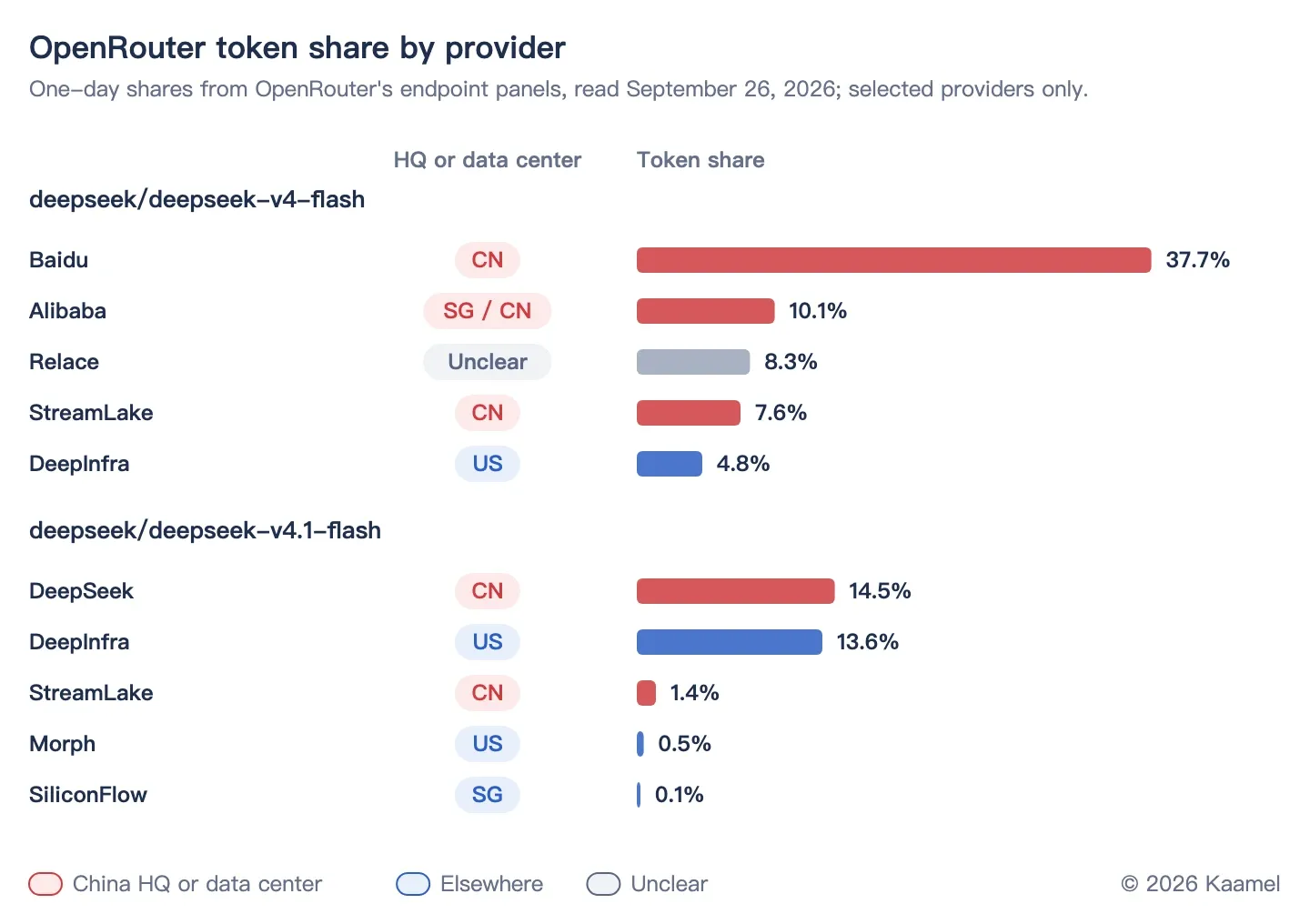
On OpenRouter, DeepSeek's China endpoint, labeled 'Prompt training: Yes,' served 13% to 15% of a model's tokens in one-day counts. We map who trains on prompts.
AI Agent Privacy: The Nine Data Channels Beyond the Prompt
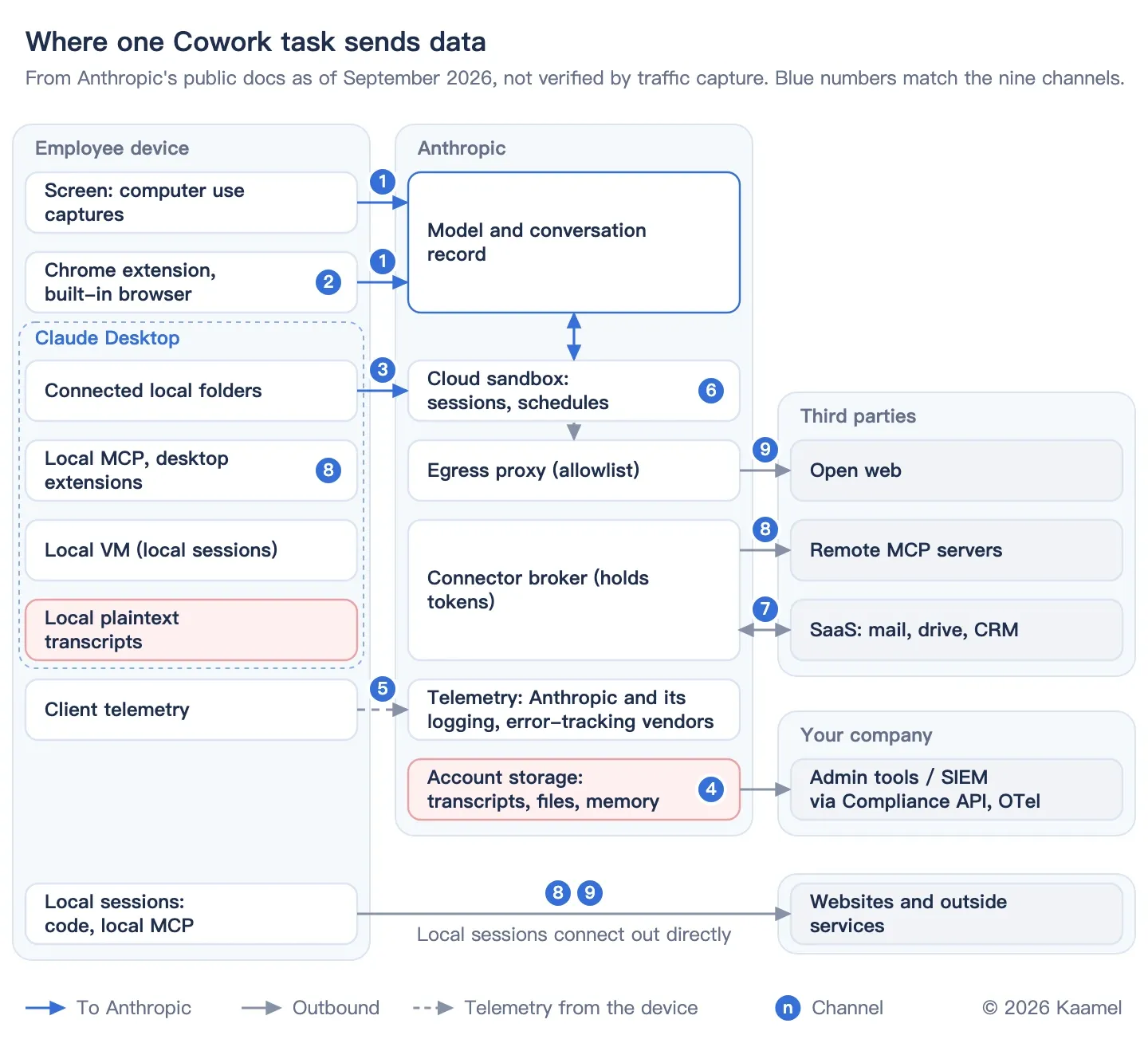
One agent task opens nine data channels beyond the prompt: screenshots, sign-ins, local files, memory, MCP. We trace a Claude Cowork task and compare 23 agents.
AI Coding Agent Privacy: Don't Trust the Toggle
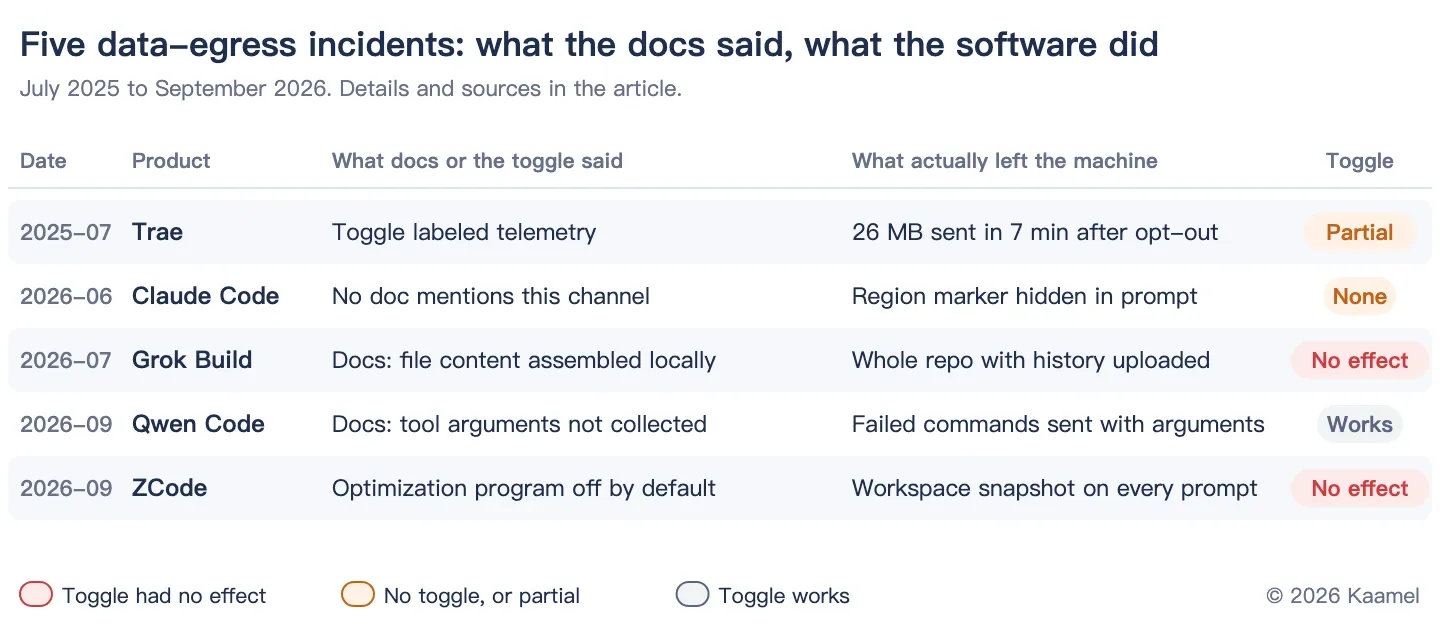
Grok Build uploaded whole repos, ZCode shipped workspace snapshots, Trae kept telemetry on after opt-out. Each checked against its policy; 15 agents compared.