
Blog
RSSFeatured

TIDA Deadline Passed—But AI Video Platforms' Deepfake Compliance Is Just Beginning
From TIDA takedown obligations and FTC disclosure guidelines to South Korea's watermark mandate—three new red lines are turning platform content governance from voluntary best practice into enforceable regulatory obligation.

Privacy Alert | Vietnam’s Personal Data Protection Law (PDPL) Officially Enacted
Vietnam’s Personal Data Protection Law (PDPL), enacted in June 2025 and effective from January 1, 2026, establishes a comprehensive national framework for personal data protection, replacing the 2023 Decree No. 13/2023/NĐ-CP. Applicable to both domestic and foreign entities processing Vietnamese citizens’ or residents’ data, the PDPL introduces strict penalties (up to 10 times illegal proceeds for data trading or 5% of annual revenue for cross-border violations), a narrow “legitimate rights and interests” processing basis, and exemptions for micro-enterprises. It mandates explicit consent, data processing and transfer impact assessments (DPIA and TIA), and robust data subject rights, including access, correction, and deletion. Enterprises must implement consent mechanisms, data security measures, and compliance with data localization under the Cybersecurity Law, with specific rules for sensitive data like children’s or health information, and a 72-hour breach reporting requirement.

Avoiding GDPR Cookie Policy Violations: A Guide for Enterprises
The Mirror’s cookie banner, which charges £1.99/month to reject non-essential cookies, violates GDPR’s requirement for freely given consent, risking fines and reputational damage. GDPR mandates transparent, opt-in cookie policies with easy withdrawal, and tools like Kaamel’s Risk Management solution help enterprises ensure compliance through automated audits and developer-friendly workflows. Enterprises must prioritize user-friendly consent mechanisms to avoid legal and trust issues.
Latest
View all articles →
Japan’s APPI Surcharge Rules: Proceeds and Voluntary Reporting
Japan’s PPC is developing APPI surcharge calculations, a 50% reduction for qualifying voluntary reports, and stronger verification for personal data transactions.

EDPB Smart Glasses Statement: Responsibilities of Users and Providers
The EDPB explains how users, manufacturers and AI providers share data protection responsibilities, including obligations towards bystanders.
Emirates Fined EUR 180,000 over Health Data Notices and Retention
Italy fined Emirates for inadequate MEDIF privacy information and seven-year health data retention. The decision requires clearer notices and revised retention periods.

OAIC Opens Investigation into the HeyCyan Smart Glasses App
Australia’s privacy regulator is investigating HeyCyan. This article explains how device, app and cloud data flows affect duties to wearers and bystanders.
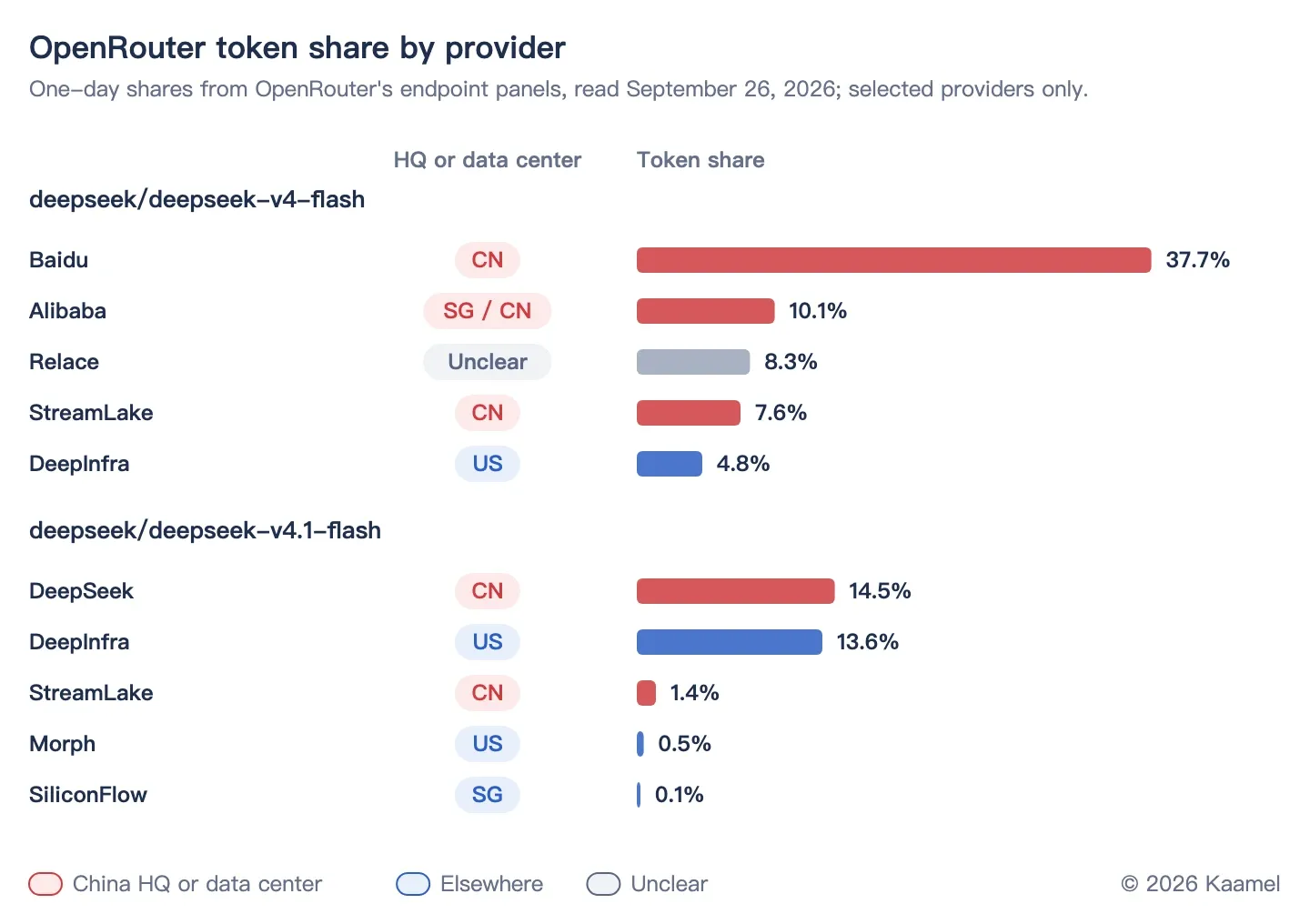
AI Gateway Privacy: Your Prompts Can Reach China and Train Models
On OpenRouter, DeepSeek's China endpoint, labeled 'Prompt training: Yes,' served 13% to 15% of a model's tokens in one-day counts. We map who trains on prompts.
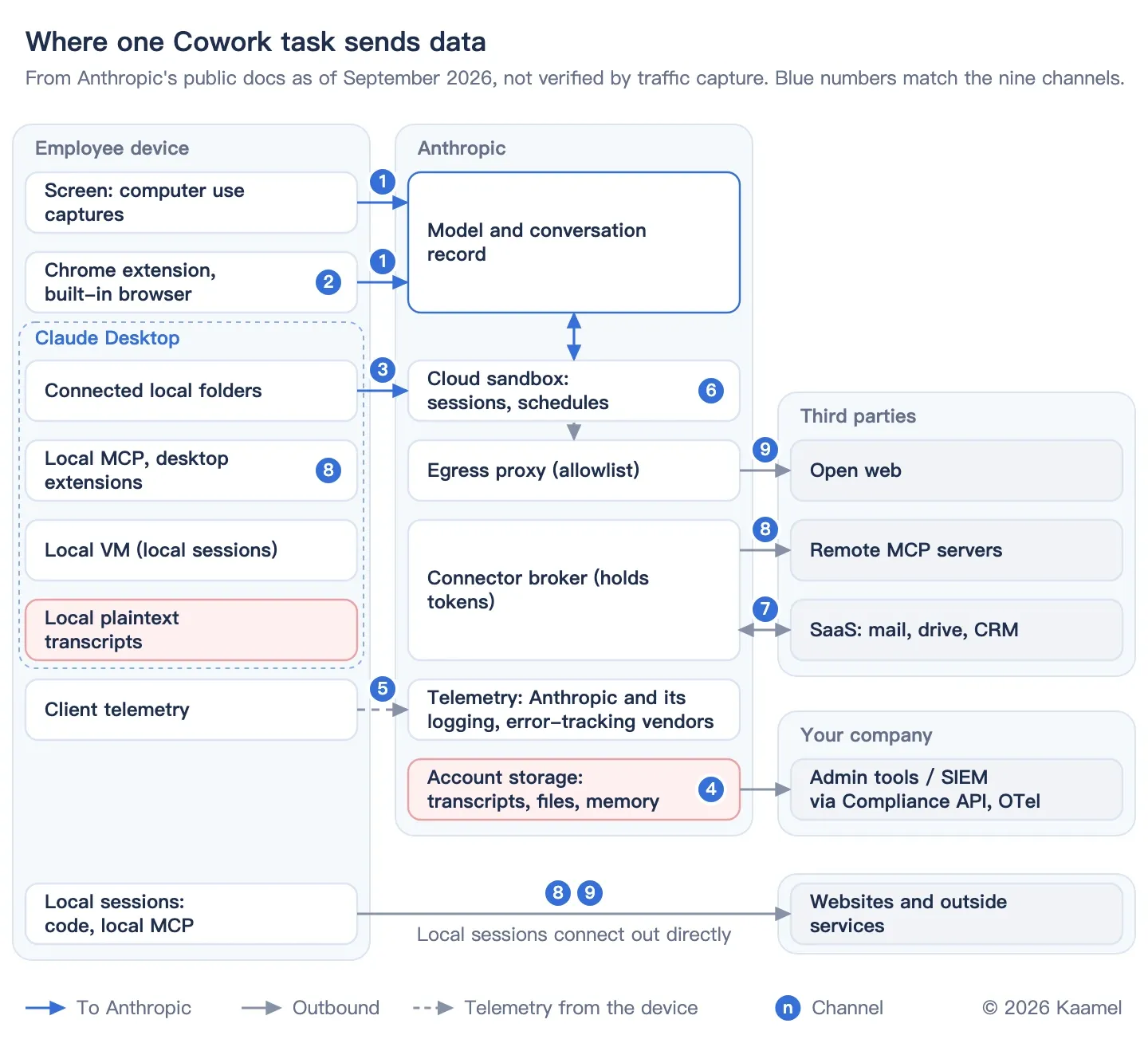
AI Agent Privacy: The Nine Data Channels Beyond the Prompt
One agent task opens nine data channels beyond the prompt: screenshots, sign-ins, local files, memory, MCP. We trace a Claude Cowork task and compare 23 agents.
Enforcement & Fines
24 Ofcom Fines Xgroovy £730,000 for Age-Check and Information Failures
Ofcom has fined Xgroovy for age assurance and information request failures. The case raises questions about age-check implementation and investigation duties.
Brazil Fines TikTok Over Minors’ Data Processing
Brazil’s ANPD fined ByteDance BRL 153.7 million over TikTok’s handling of minors’ data, citing weak legal bases, age controls, and safeguard evidence.
Uber Fined Nearly €825 Million Over Automated Driver Deactivations
Dutch regulator fines Uber nearly €825 million over automated driver deactivations. We examine the facts, legal grounds and effective human review.
AI Regulation
15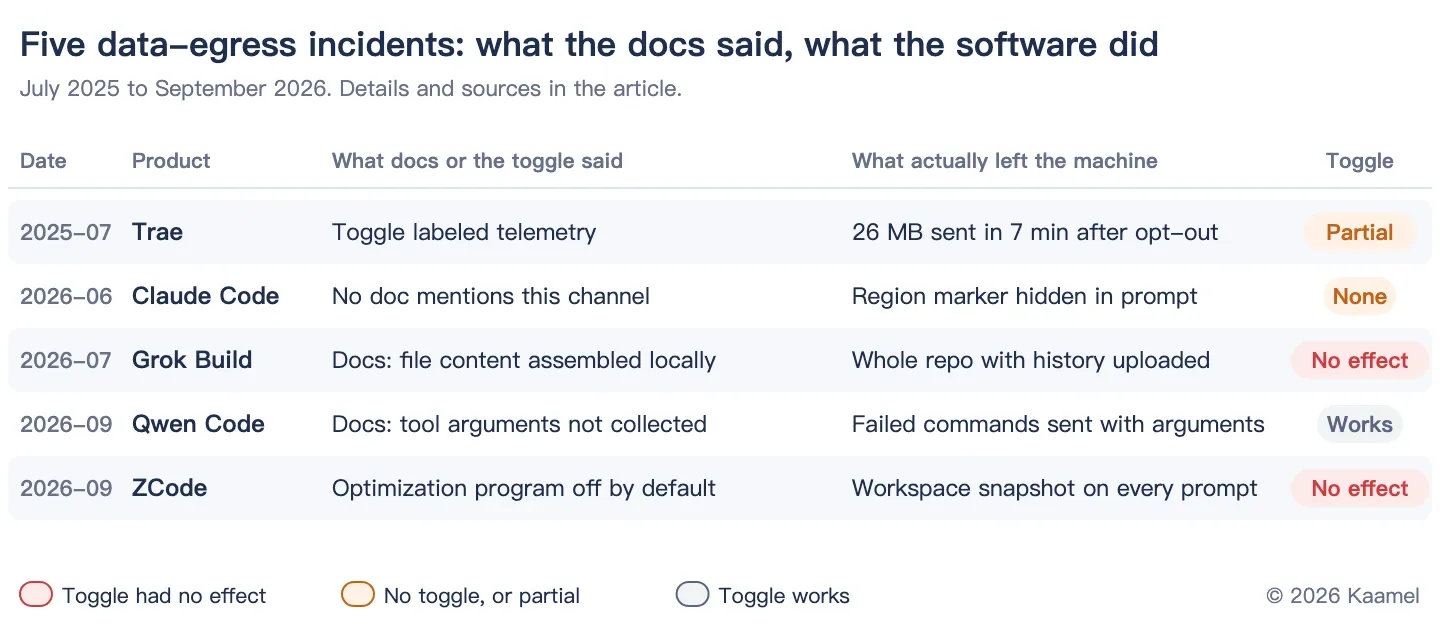
AI Coding Agent Privacy: Don't Trust the Toggle
Grok Build uploaded whole repos, ZCode shipped workspace snapshots, Trae kept telemetry on after opt-out. Each checked against its policy; 15 agents compared.
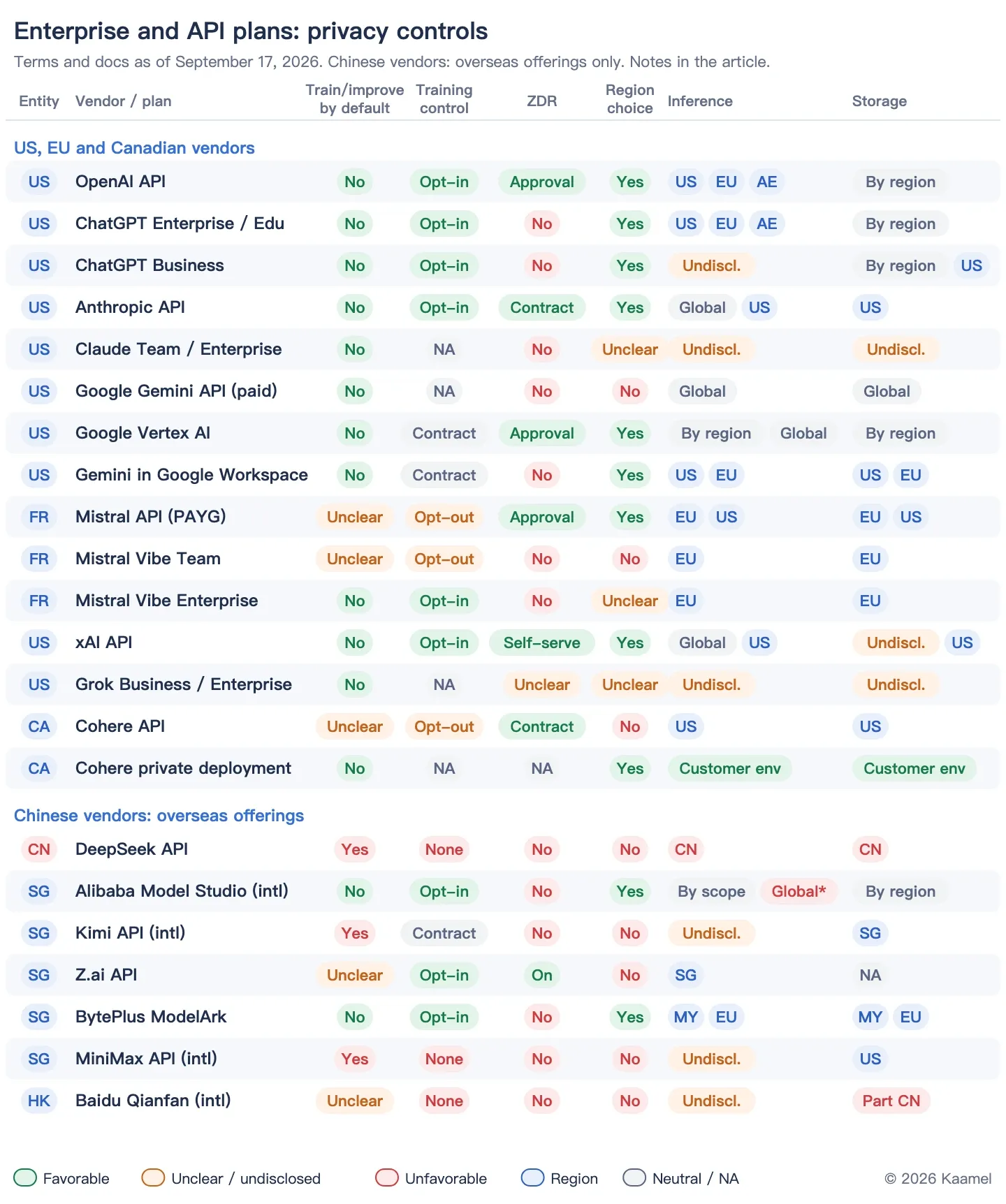
LLM API Privacy Due Diligence: 3+ of 13 Train or Improve on Your Data
13 LLM APIs from OpenAI to DeepSeek: who trains on or improves with your data by default, who offers ZDR, where inference runs, and who lacks a public DPA.
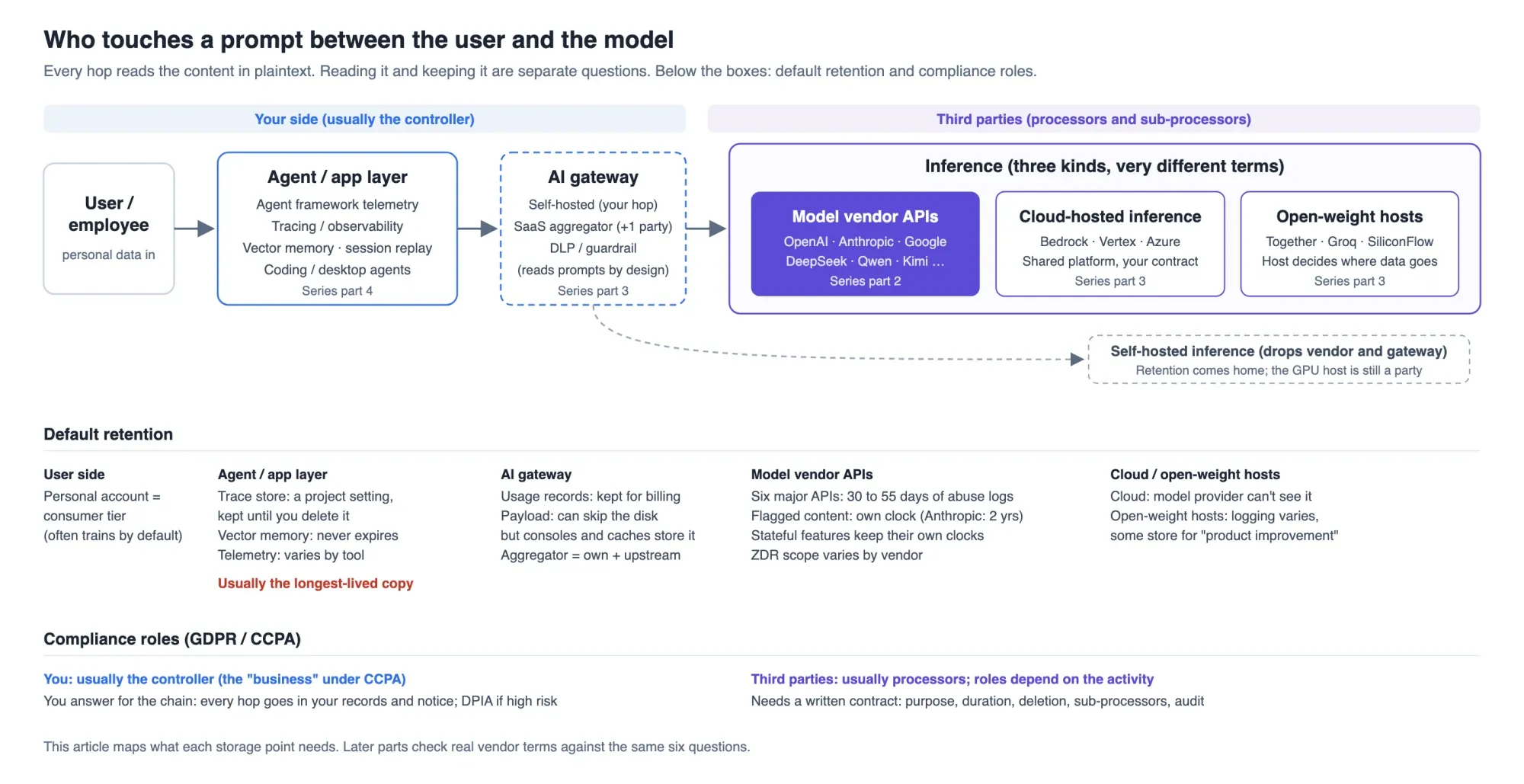
AI Data Compliance Map: The 10 Places a Prompt Gets Stored
A prompt can land in 10 kinds of storage. Six major model APIs keep it 30 to 55 days; trace stores keep it until deleted. How to check each hop.
Laws & Guides
17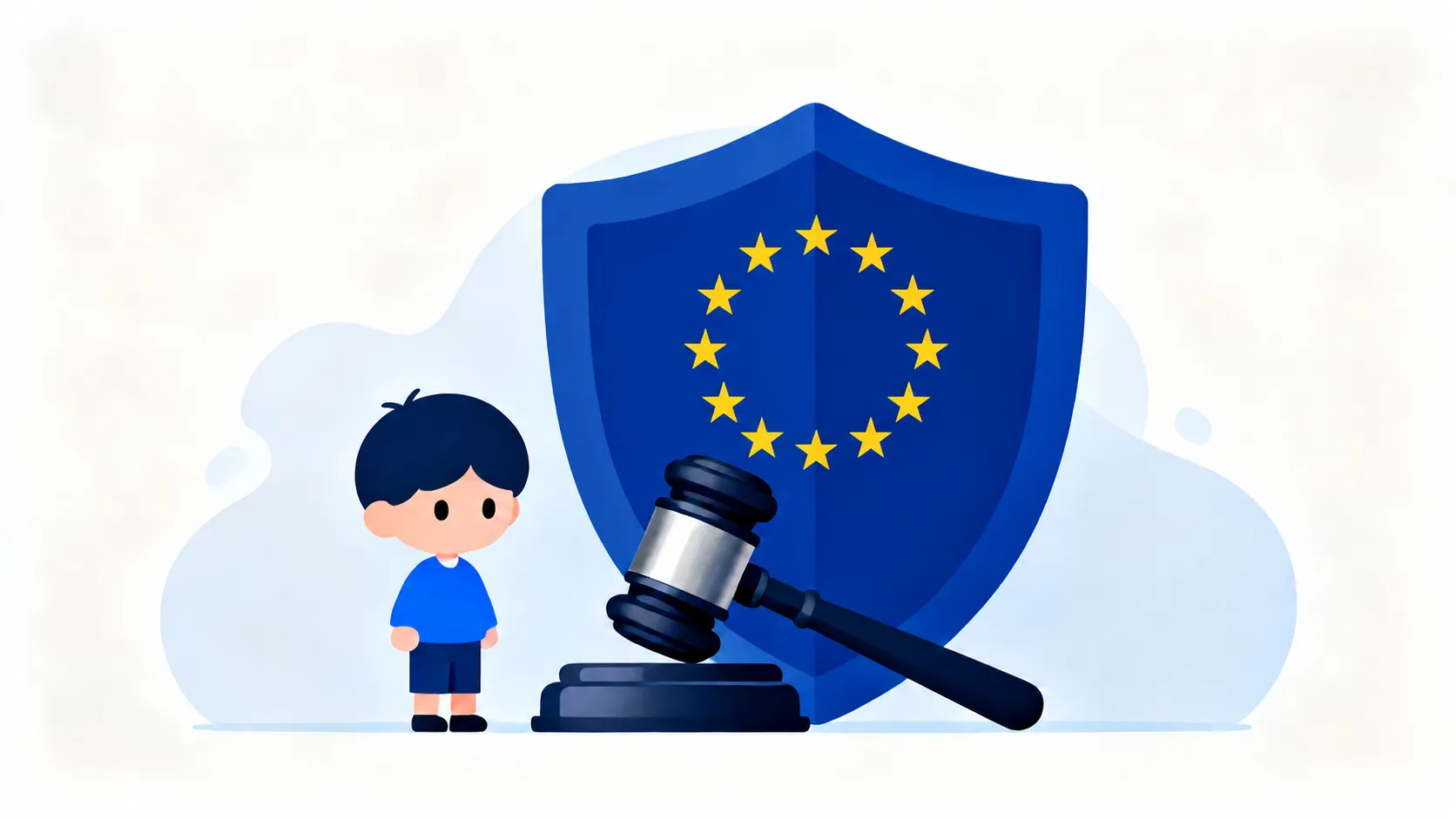
EU Kids Act: Proposed Age-Based Restrictions on Minors’ Social Media Use
The EU Kids Act draft sets out age-based access rules, safer design, AI safeguards and audits. We examine the proposed changes and their implications for products.
Indonesia’s PDPL Implementing Regulation: Key GDPR Differences
How Indonesia’s PP 33/2026 and PDPL differ from the GDPR on contracts, individual rights, processing records, breach notices and international transfers.

ChatGPT Is Now a VLOSE Under the DSA: What Changes?
The European Commission has designated ChatGPT as a very large online search engine. We explain the DSA threshold and six additional duties that follow.
Children's Privacy
8
California Child Online Safety Laws: Design and Product Requirements
AB 2246 and AB 1709: changes to age-appropriate design, differences from COPPA, and implications for age signals, recommendations, autoplay, and privacy defaults.

FTC Sues TikTok and ByteDance for COPPA Violations and Breach of Settlement Agreement
The U.S. Federal Trade Commission (FTC) has filed a lawsuit against TikTok and its parent company ByteDance, accusing them of violating the Children’s Online Privacy Protection Act (COPPA) and a 2019 settlement agreement. The lawsuit alleges that TikTok failed to delete underage users' personal data, improperly collected data from minors without parental consent, and created obstacles for parents attempting to delete their children's data.

US Passes Landmark Legislation to Strengthen Child Online Privacy Protections
On July 30, the US passed two significant laws, the Kids Online Safety Act (KOSA) and Children and Teens' Online Privacy Protection Act (COPPA 2.0), marking a major shift in regulatory strategies for protecting children's online privacy.
Security
1Cookies & Consent
6
Cookie Consent : Effective or Deceptive?
This study looked at the cookie consent practices of 64 Fortune 500 companies that directly engage with European customers. By simulating customers interacting with the website, the research scrutinizes how these global companies adhere to regulation. A staggering 70% of the evaluated websites do not comply with GDPR cookie consent requirements, indicating a substantial gap in adherence to privacy laws among even the biggest companies.

4 Common cookie banner designs are NOT-OK by GDPR authorities
Recently, NOYB has filed numerous complaints against companies using questionable consent banners. This report categorizes and critiques eight types of cookie banner designs prevalent in non-compliant practices
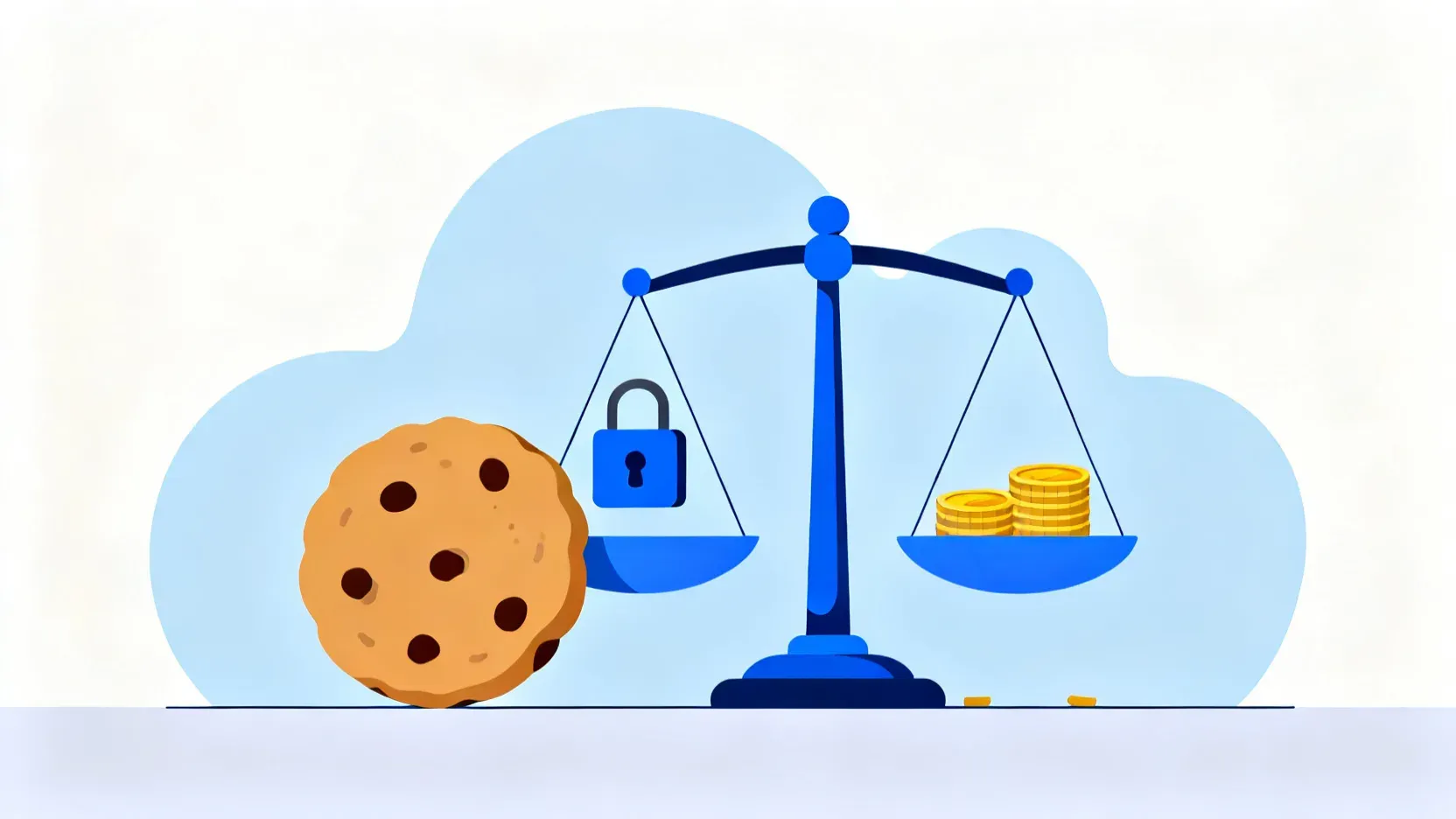
EDPB Issues Guidelines on 'Consent or Pay' Models
The European Data Protection Board (EDPB) has issued guidelines on 'Consent or Pay' models operated by large online platforms for behavioral advertising.
Cross-border Data
5
DOJ Issues Proposed Rule to Restrict Foreign Access to Americans' Sensitive Data
The U.S. Department of Justice has issued a proposed rule to restrict data access by specific foreign countries, following an executive order by President Biden.
Brazil's ANPD Approves New International Data Transfer Regulation and SCCs
On August 23, Brazil's National Data Protection Authority (ANPD) approved new regulations on international data transfers, including the adoption of Standard Contractual Clauses (SCCs) as a legal mechanism. These regulations require companies to ensure compliance with Brazil's LGPD and implement transparency measures for cross-border data transfers.

South Korea’s FSS Investigates Kakao Pay for Unauthorized Data Transfers to Alipay
The Financial Supervisory Service (FSS) of South Korea has found that Kakao Pay transmitted user data to Alipay in China without consent, potentially violating the Credit Information Use and Protection Act. Kakao Pay faces possible sanctions and significant penalties as the investigation continues.
Compliance
1
Biometrics
3
Illinois Amends BIPA to Limit Liability and Introduce Electronic Signatures
On August 2, Illinois amended the Biometric Information Privacy Act (BIPA), reducing the number of violations counted for repeated biometric data collection from the same individual and allowing electronic signatures as a method for obtaining consent. This amendment significantly lowers potential damages in BIPA lawsuits and offers businesses more flexibility in compliance.

Meta's Landmark $1.4 Billion Biometric Data Lawsuit Settlement with Texas
Summary In February 2022, Texas Attorney General Ken Paxton sued Meta formerly known as Facebook , alleging that Meta unlawfully captured the biometric identifi

Zellmer vs. Facebook: A Unique Privacy Lawsuit Under Illinois BIPA
Zellmer sued Facebook (now Meta) under the Illinois Biometric Information Privacy Act (BIPA) for privacy violations, similar to the "In re Facebook Biometric Information Privacy Litigation" case, which resulted in a $650 million settlement.