AI Regulation
AI Gateway Privacy: Your Prompts Can Reach China and Train Models
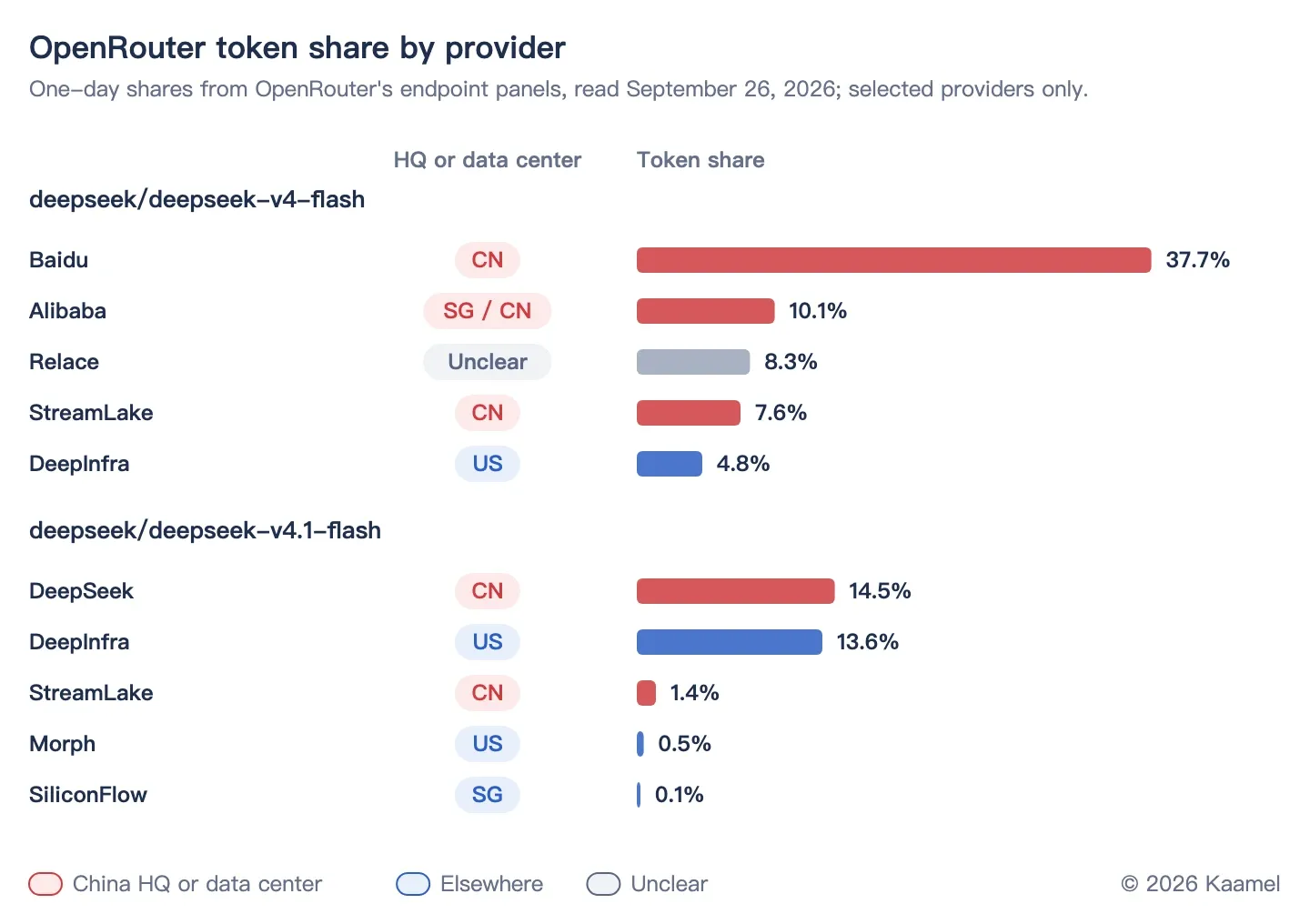
On OpenRouter, DeepSeek's China endpoint, labeled 'Prompt training: Yes,' served 13% to 15% of a model's tokens in one-day counts. We map who trains on prompts.
AI Agent Privacy: The Nine Data Channels Beyond the Prompt
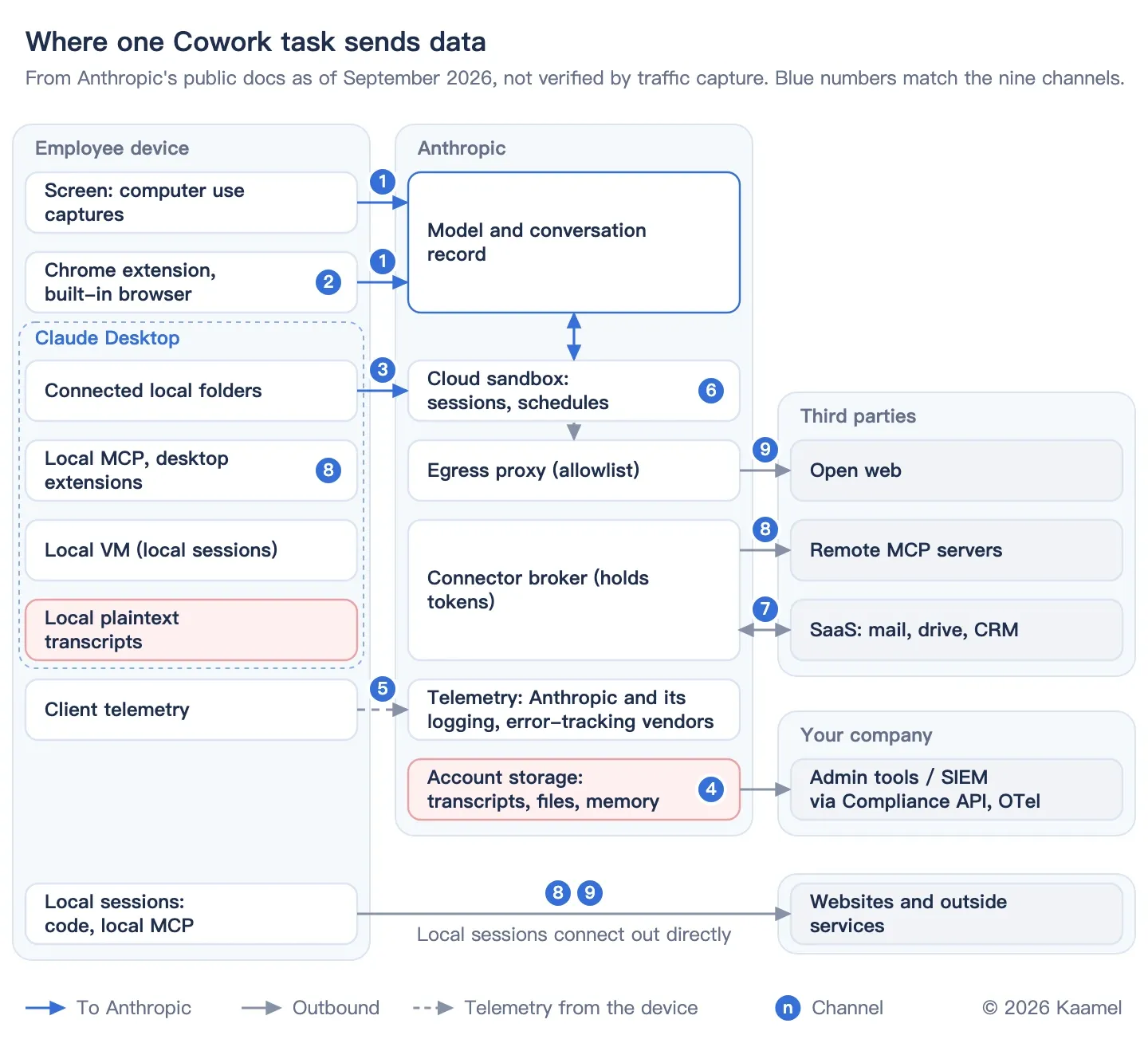
One agent task opens nine data channels beyond the prompt: screenshots, sign-ins, local files, memory, MCP. We trace a Claude Cowork task and compare 23 agents.
AI Coding Agent Privacy: Don't Trust the Toggle
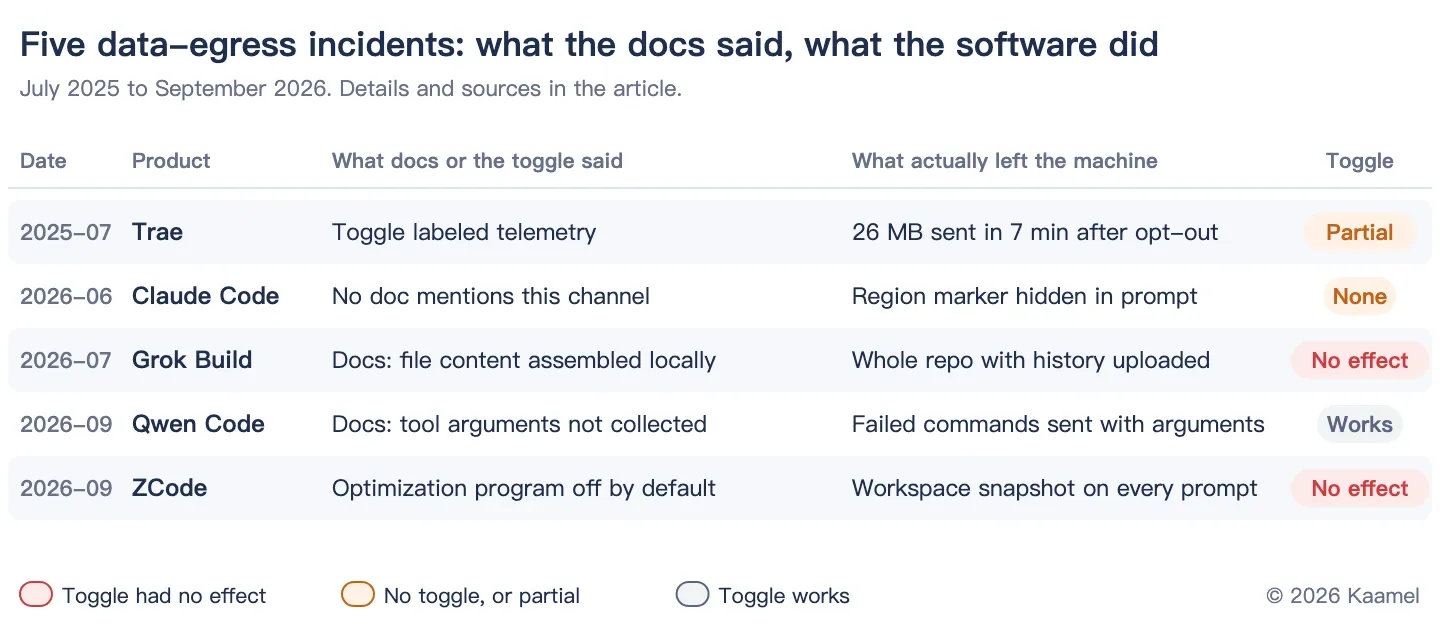
Grok Build uploaded whole repos, ZCode shipped workspace snapshots, Trae kept telemetry on after opt-out. Each checked against its policy; 15 agents compared.
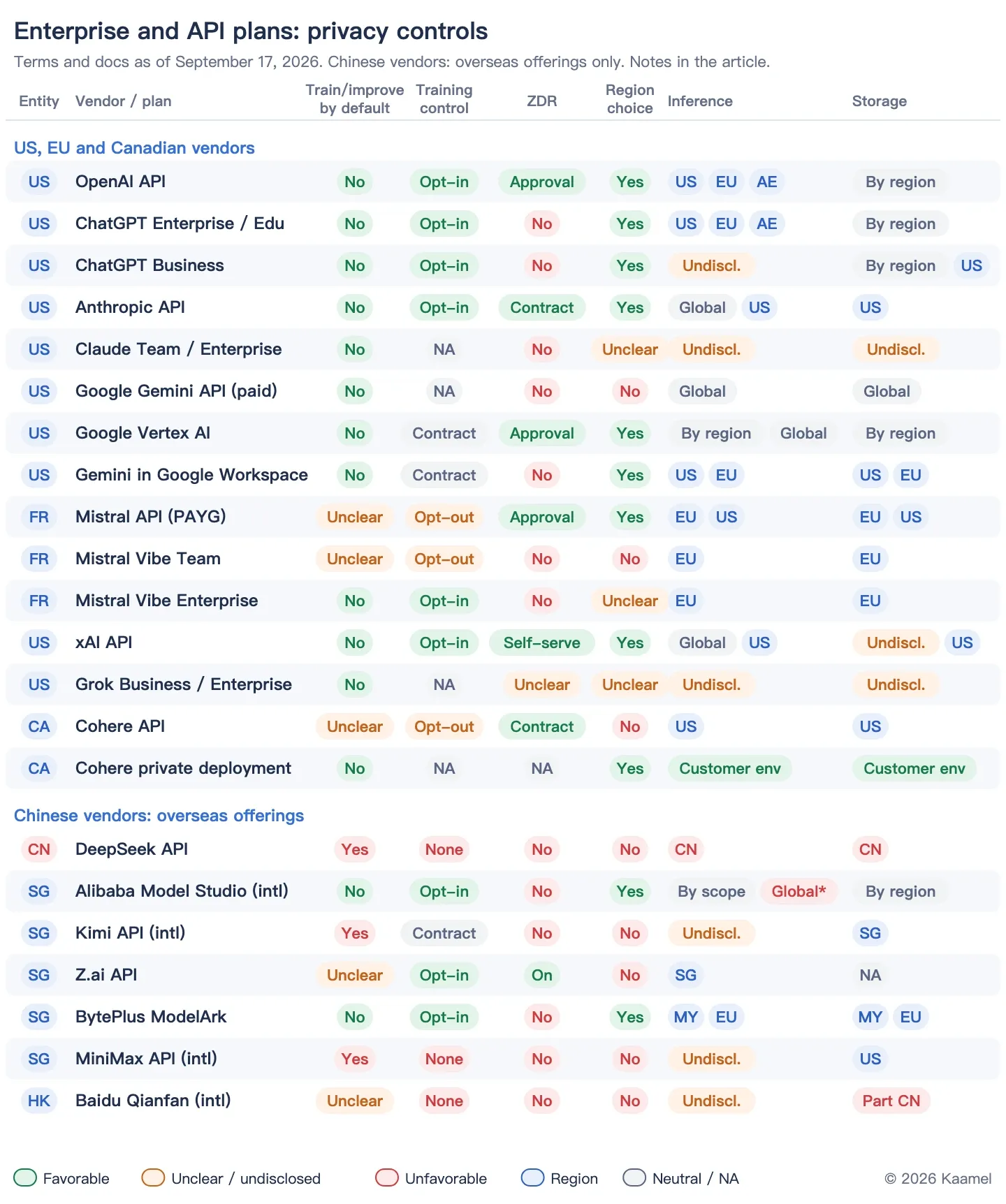
LLM API Privacy Due Diligence: 3+ of 13 Train or Improve on Your Data
13 LLM APIs from OpenAI to DeepSeek: who trains on or improves with your data by default, who offers ZDR, where inference runs, and who lacks a public DPA.
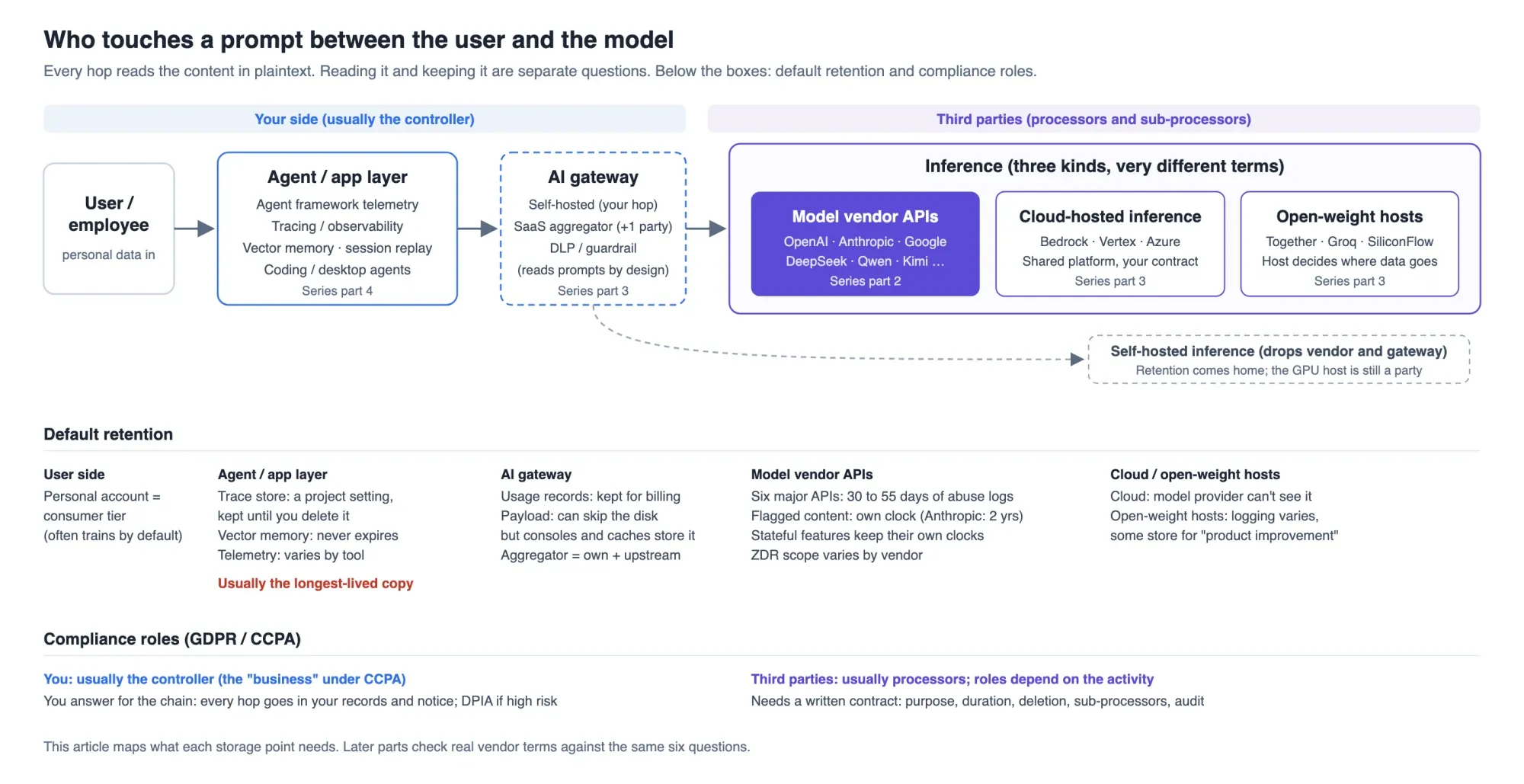
AI Data Compliance Map: The 10 Places a Prompt Gets Stored
A prompt can land in 10 kinds of storage. Six major model APIs keep it 30 to 55 days; trace stores keep it until deleted. How to check each hop.
When Does Public Audio Training Become Voiceprint Collection?
Google’s motion to dismiss puts a core BIPA question in focus: when does using public audio to train an AI model amount to collecting a voiceprint?
EU AI Content Transparency Code: What Claude's Plan Shows
Anthropic has detailed Claude's text watermarking and C2PA metadata. We compare the plan with the EU code's marking and detection requirements.
EU AI Act Article 50: Product Changes to Make
Article 50 of the EU AI Act applies from 2 August 2026. See how providers and deployers should adapt AI products for five transparency duties.

KIDS Act Passes House: Rules for Platforms, Games, and AI
H.R. 7757 has passed the House and moved to a Senate committee. This brief covers proposed rules for platforms, gaming, AI chatbots, and COPPA 2.0.

TIDA Deadline Passed—But AI Video Platforms' Deepfake Compliance Is Just Beginning
From TIDA takedown obligations and FTC disclosure guidelines to South Korea's watermark mandate—three new red lines are turning platform content governance from voluntary best practice into enforceable regulatory obligation.

X Faces Multiple Complaints in Europe for Alleged Illegal Use of User Data to Train AI Models
Social platform X (formerly Twitter) is facing several complaints in Europe for allegedly using EU users' personal data without consent to train its AI technologies, including Grok. The Irish Data Protection Commission has filed a lawsuit, and the non-profit organization NOYB has submitted complaints in nine countries, accusing X of violating GDPR regulations by collecting and using data without proper transparency or legal basis.

The World’s First Artificial Intelligence Act is Set to Take Effect—What You Need to Know
The EU Artificial Intelligence Act introduces a comprehensive regulatory framework for AI systems, categorizing them based on risk levels and imposing specific transparency and compliance obligations for each category.

Understand the Colorado AI Act
The Colorado AI Act aims to regulate consumer rights protection in interactions with AI systems, reduce algorithmic discrimination, and promote fairness and safety.

EU AI Act Explained
The EU AI Act proposes a framework to ensure safe, lawful AI usage while fostering investment, innovation, and market development.

Navigating the Legal Landscape of Web Scraping for AI Development
The PM v. OpenAI LP lawsuit over web scraping for AI development highlights legal challenges and privacy concerns in the field.